In This Guide
- Nitrogen Fertilizer Explained: What N-P-K Means in Summer
- Scotts Turf Builder Summer Lawn Food — Best Overall
- Milorganite — Best Organic Lawn Fertilizer / No-Burn
- Pennington UltraGreen — Best for Warm-Season Grasses
- Lesco Professional — Best Slow-Release Lawn Fertilizer
- Espoma — Best Natural Lawn Fertilizer for Cool-Season Grass
- Simple Lawn Solutions — Best Liquid Lawn Fertilizer
- Lawn Fertilizer Comparison Table
- Seasonal Timing Guide
- How to Apply Summer Lawn Fertilizer
- Frequently Asked Questions
Nitrogen Fertilizer Explained: What N-P-K Means for Summer Lawn Care
Every bag of lawn fertilizer has three numbers on the front, like 32-0-10 or 24-0-11. These are the N-P-K values. They tell you exactly what nutrients are in the bag and in what proportion. Choosing the wrong ratio in summer is one of the most common causes of fertilizer burn and lawn damage.
Ideal N-P-K Ratios for Summer Lawn Fertilizer
The best lawn fertilizers for summer share a common pattern: moderate-to-high nitrogen from a slow-release source, zero or near-zero phosphorus, and solid potassium. Common ratios you will see on quality summer products are 32-0-10, 30-0-4, 24-0-11, and 26-0-4.
Avoid high-nitrogen fast-release lawn fertilizers in summer heat. These force rapid blade growth that puts the lawn under stress when temperatures are already high. Slow-release nitrogen fertilizer sources like sulfur-coated urea (SCU), polymer-coated urea (PCU), or IBDU release gradually over 6 to 12 weeks and carry far less burn risk. When in doubt, look for the words "slow release" or "controlled release" on the bag.
Never apply fertilizer when your lawn is under drought stress or dormant from heat. Fertilizing a struggling lawn makes it worse, not better. Water deeply for several days first, wait for the grass to recover and show green growth, then fertilize.
Slow-Release vs Fast-Release: Which to Choose in Summer
Fast-release fertilizers deliver a quick burst of nitrogen that greens the lawn within days. They are great in spring and fall but carry a real burn risk in summer, especially above 85°F (29°C). They also need reapplying every 3 to 4 weeks.
Slow-release fertilizers break down gradually over 6 to 12 weeks. They feed the lawn steadily, reduce the risk of burn, and need far fewer applications. All six products below use slow-release nitrogen, which is why they are suitable for summer use.
1. Scotts Turf Builder Summer Lawn Food — Best Overall Lawn Fertilizer
Scotts designed this product specifically for summer conditions. The 32-0-10 ratio gives you high nitrogen for green growth, zero phosphorus (correct for established lawns), and a solid 10% potassium for heat and drought tolerance. The nitrogen is slow-release, which means it feeds for up to 8 weeks without the burn risk of a fast-release product.
It comes in granule form and applies with a standard broadcast spreader or a Scotts drop spreader. The granules are lightweight and spread evenly. Coverage per bag is generous, making it one of the better value options per square foot for larger lawns.
It works on all common grass types: Bermuda, St. Augustine, Zoysia, Kentucky bluegrass, tall fescue, and perennial ryegrass. This makes it a practical default choice for homeowners who do not want to buy different products for different lawn conditions.
Pros
- Summer-specific N-P-K (32-0-10)
- Slow-release feeds for up to 8 weeks
- Works on all grass types
- Widely available at Home Depot, Walmart, Lowes
- Easy granule application with any spreader
Cons
- Synthetic formula, not suitable for organic programs
- Can burn if applied to wet grass blades
- Not ideal for lawns under severe drought stress
2. Milorganite — Best Organic Lawn Fertilizer for Summer
Milorganite is made from heat-dried microbes from the Milwaukee Metropolitan Sewerage District. It sounds unusual, but it has been used on golf courses and residential lawns for over 90 years. The slow-release organic nitrogen will not burn your lawn under any conditions, which makes it one of the few fertilizers that are genuinely safe to apply in peak summer heat.
The 6-4-0 ratio is lower in nitrogen than synthetic options, which means the greening effect is slower and more gradual. You will not see a dramatic colour change in two days. But over 8 to 10 weeks, the lawn develops a rich, sustained green that holds well through heat. It also contains 2.5% iron, which contributes to a deep, dark green colour.
It is safe around children and pets once it has been watered in and the lawn is dry. Because it is organic, it also feeds soil microbes and gradually improves soil structure over time, which benefits the lawn long-term.
Pros
- Will not burn under any temperature conditions
- Safe for children and pets once watered in
- Contains iron for rich dark green colour
- Improves soil health over time
- Long-trusted product with 90+ years of use
Cons
- Lower N content means slower greening
- No potassium (K=0), less drought tolerance support
- Odour when first applied, fades after watering
- Higher cost per pound of nitrogen than synthetics
3. Pennington UltraGreen Lawn Fertilizer
Pennington UltraGreen is a strong choice for warm-season grass lawns in the South and Southwest. The 30-0-4 ratio delivers high nitrogen for sustained growth in actively growing warm-season grasses, and the formula includes iron which gives Bermuda, Zoysia, and St. Augustine lawns a noticeably deeper green colour within a few days of application.
The nitrogen is a blend of fast and slow-release sources. This gives you the quick green-up of fast-release with the sustained feeding of slow-release. Because warm-season grasses are actively growing in summer heat rather than slowing down like cool-season grasses, they can handle and benefit from the higher nitrogen load.
The potassium (K=4) is lower than Scotts or Lesco, so if your lawn is in a hot, dry region with water restrictions, pairing this with a potassium supplement in mid-summer is a sensible approach.
Pros
- High N great for actively growing warm-season grasses
- Iron delivers deep green colour quickly
- Blend of fast and slow-release nitrogen
- Works on Bermuda, St. Augustine, Zoysia
Cons
- Lower potassium than other summer picks
- Not ideal for cool-season lawns in summer heat
- Fast-release component increases burn risk if over-applied
4. Lesco Professional — Best Slow-Release Lawn Fertilizer
Lesco makes fertilizers used by professional lawn care companies, golf courses, and sports turf managers. The 24-0-11 ratio is a classic professional summer formula. The nitrogen is 50% slow-release, which means half feeds immediately and half feeds gradually over the following 10 to 12 weeks. The 11% potassium is the highest K value among our picks, giving the best heat and drought stress protection available in a granular product.
Lesco granules are homogeneous, meaning each granule contains all three nutrients in the same ratio. This is unlike blended fertilizers where different-sized granules can separate in the spreader and cause uneven feeding. Even coverage means more consistent results across the lawn.
It is available at John Deere Landscapes dealer locations and Home Depot stores in the US. It is sold in 50 lb bags which are cost-effective for large properties. If your lawn is over 10,000 square feet, this is worth considering over consumer brands.
Pros
- Professional-grade formula used by lawn services
- Highest potassium (K=11) for drought protection
- Homogeneous granules for even nutrient distribution
- 50% slow-release for 10-12 week feeding
- Cost-effective for large lawns
Cons
- Less widely available than consumer brands
- Sold in large bags only, not ideal for small lawns
- Requires accurate spreader calibration
5. Espoma — Best Natural Lawn Fertilizer for Cool-Season Grass
Cool-season lawns like tall fescue, Kentucky bluegrass, and perennial ryegrass slow down significantly in summer. They do not need high nitrogen during this period. What they do need is support to survive the heat and come back strong in fall. Espoma Summer Revitalizer addresses this with a low 3-0-6 ratio: minimal nitrogen to avoid forcing growth the lawn cannot sustain, and double the potassium to strengthen cells and improve heat resilience.
Espoma adds their Bio-tone beneficial microbe blend to the formula. These microbes improve nutrient uptake, enhance soil structure, and help the lawn manage water more efficiently during summer drought conditions. Over a season of use, the soil biology noticeably improves.
This is also a good choice for environmentally sensitive properties near waterways, where high-nitrogen runoff is a concern. The organic nitrogen sources release slowly and have a much lower risk of nutrient runoff than synthetic formulas.
Pros
- Low N avoids forcing growth in summer heat
- High K (double the N) for heat stress support
- Bio-tone microbes improve long-term soil health
- Safe near waterways, low runoff risk
- OMRI listed for organic programs
Cons
- Not suitable for warm-season grasses needing summer N
- Greening effect is minimal by design
- Higher cost per bag than synthetic alternatives
6. Simple Lawn Solutions — Best Liquid Lawn Fertilizer
Most summer fertilizers are granular. Simple Lawn Solutions offers a liquid alternative with a 15-0-15 ratio that delivers equal parts nitrogen and potassium in a form the lawn absorbs within hours rather than days. This makes it especially useful for spot-treating stressed areas, for small lawns where a full broadcast spreader application feels like overkill, or for quick recovery feeding after a period of neglect.
The product attaches to a standard garden hose via the built-in hose-end sprayer connection. Cover rate is good, and the application takes just a few minutes for an average backyard. Because it is liquid, it is also easier to apply evenly on sloped or irregular lawn shapes where granules tend to roll off or collect in low spots.
The equal N-K balance at 15-0-15 is well-suited to summer conditions. You get enough nitrogen to maintain green colour and enough potassium to support heat and drought tolerance simultaneously. It is not the best choice for large lawns over 5,000 square feet, where a granular product is more practical and economical.
Pros
- Fast nutrient absorption, results in days
- Balanced 15-0-15 N-K for summer conditions
- Easy hose-end sprayer application
- Good for irregular or sloped lawn shapes
- Ideal for spot treatment and small areas
Cons
- Not practical or cost-effective for large lawns
- Needs more frequent reapplication than granulars
- Hose-end sprayer can clog in hard water areas
Best Lawn Fertilizers for Summer: Side-by-Side Comparison
Use this table to find the right lawn fertilizer for your grass type, lawn size, and summer conditions at a glance.
| Fertilizer | N-P-K | Type | Burn Risk | Warm-Season | Cool-Season | Feed Duration |
|---|---|---|---|---|---|---|
| Scotts Turf Builder Summer | 32-0-10 | Granular | ● Low | ✓ | ✓ | Up to 8 weeks |
| Milorganite Organic | 6-4-0 | Granular | None | ✓ | ✓ | 8–10 weeks |
| Pennington UltraGreen | 30-0-4 | Granular | ● Moderate | ✓ | ✗ | Up to 6 weeks |
| Lesco Professional | 24-0-11 | Granular | ● Low | ✓ | ✓ | 10–12 weeks |
| Espoma Summer Revitalizer | 3-0-6 | Granular | None | ✗ | ✓ | 8–10 weeks |
| Simple Lawn Solutions | 15-0-15 | Liquid | ● Low | ✓ | ✓ | 3–4 weeks |
● = partial / conditional ✓ = yes ✗ = not recommended
Seasonal Timing Guide: When to Fertilize
Timing is just as important as which product you choose. Applying fertilizer at the wrong time of year can stress your lawn rather than help it. The right schedule depends on your grass type.
Warm-Season Grasses (Bermuda, St. Augustine, Zoysia, Centipede)
Warm-season grasses go dormant in winter and actively grow from late spring through summer. This is their primary feeding window. Apply fertilizer from late May through August, roughly every 6 to 8 weeks. Stop feeding in early September to allow the lawn to harden off before winter dormancy.
Cool-Season Grasses (Tall Fescue, Kentucky Bluegrass, Ryegrass)
Cool-season grasses grow most actively in spring and fall. In summer, they slow down or go semi-dormant. Over-fertilizing cool-season lawns in peak summer heat pushes growth the grass cannot sustain and leads to brown patches and disease. The correct approach is to fertilize lightly in early summer only, then pause until fall.
Always check the forecast before fertilizing. Do not apply if rain is expected within 48 hours (heavy rain washes granules off before they activate) and do not apply if temperatures will exceed 90°F (32°C) in the next 24 hours. Ideal application conditions are mild temperatures, no wind, and light rain or irrigation expected within 24 to 48 hours.
How to Apply Summer Lawn Fertilizer: Step-by-Step
Applying lawn fertilizer correctly is as important as choosing the right product. Uneven application causes stripes and burnt patches. These steps apply to granular fertilizers, which cover all six products above except Simple Lawn Solutions.
- 1Mow first, then wait 2 days
Mow your lawn to its normal height before fertilizing. Wait 2 days after mowing so the grass blades have recovered from cutting stress before you add nutrients.
- 2Water deeply the day before
Apply fertilizer to a moist but not wet lawn. Water the evening before so the soil is hydrated. Do not apply to dry, stressed grass or to soggy, waterlogged soil.
- 3Calibrate your spreader
Check the bag for the recommended spreader setting. Different spreader models use different settings for the same rate. Applying at the wrong rate is the most common cause of streaking and burn.
- 4Apply in two passes at half-rate
Instead of one pass at the full rate, apply in two passes at half the rate, crossing in perpendicular directions. This gives more even coverage and eliminates missed strips.
- 5Blow or sweep granules off hard surfaces
Fertilizer granules on driveways, sidewalks, and patios will wash into storm drains and waterways when it rains. Blow or sweep them back onto the lawn before watering.
- 6Water in within 24 hours
Water the lawn lightly to activate the granules and move the nutrients into the soil. About a quarter inch of water is enough. Do not overwater as this can wash nutrients beyond the root zone.
- 7Keep children and pets off until dry
For synthetic fertilizers, keep people and pets off the lawn until the granules have been watered in and the surface is dry. Organic products like Milorganite should also be watered in before allowing contact.
If your lawn has recurring problems or you are uncertain which N-P-K to choose, a soil test from your local cooperative extension service will tell you exactly what your lawn is lacking. Tests typically cost $15 to $25 and give specific fertilizer recommendations for your soil type and grass species. Many universities offer them for free or at low cost.
If your lawn has both weeds and a nutrient deficiency, a weed and feed lawn fertilizer combines herbicide and grass fertilizer in one application. It kills broadleaf weeds while feeding the lawn in a single pass. Best applied in spring or early fall rather than peak summer heat.
Frequently Asked Questions
For most lawns in summer, look for high nitrogen, zero or low phosphorus, and moderate-to-high potassium. Common good summer ratios are 32-0-10, 30-0-4, or 24-0-11. The potassium is especially important in summer because it helps grass handle heat stress and drought. Avoid high phosphorus on established lawns.
Yes, but with caution. Never apply fast-release synthetic fertilizer when temperatures are above 90°F (32°C) or when the lawn is under drought stress, as this can burn the grass. Choose a slow-release fertilizer for summer heat, or use an organic product like Milorganite which will not burn regardless of temperature. Apply in the early morning or evening when temperatures are lower.
For warm-season grasses like Bermuda and St. Augustine, fertilize every 6 to 8 weeks through summer. For cool-season grasses like fescue and bluegrass, fertilize lightly in early summer only, then stop in peak heat and resume in fall. Over-fertilizing cool-season lawns in mid-summer stresses the grass.
Fast-release fertilizer delivers nitrogen quickly and greens up the lawn within days, but it can burn the grass in summer heat and needs more frequent reapplication every 3 to 4 weeks. Slow-release fertilizer breaks down gradually over 6 to 12 weeks, reduces burn risk, and feeds the lawn steadily. Slow-release is the safer and more practical choice for summer fertilizing.
Yes. Water the lawn within 24 to 48 hours after applying granular fertilizer. Watering activates the fertilizer and washes the granules off the grass blades and into the soil where the roots can absorb the nutrients. For liquid fertilizers, water lightly before application if the soil is very dry, then allow the product to dry on the blades before watering again.
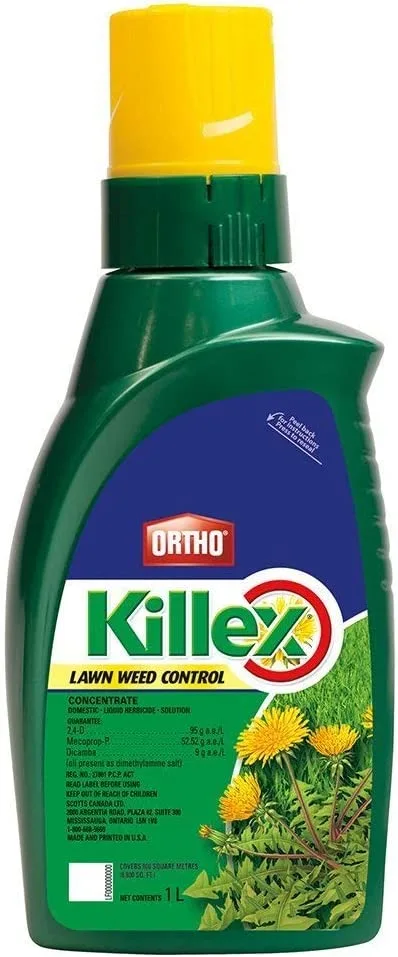
For the majority of homeowners, Scotts Turf Builder Summer Lawn Food (32-0-10) is the best overall lawn fertilizer for summer. It is widely available at Home Depot, Lowes, and Walmart, works on all grass types, and the slow-release formula feeds for 8 weeks without burn risk.
If you want an organic lawn fertilizer, Milorganite is the smarter pick. Zero burn risk, safe once watered in, and it improves soil health over time. For warm-season grasses in the South, Pennington UltraGreen or Lesco Professional slow-release lawn fertilizer will push deeper green through the heat.
As an Amazon Associate we earn from qualifying purchases. This does not affect our reviews.
More Lawn Care Guides
Best Weed Killer for Grass
Control weeds without killing your lawn. Safe options for Bermuda, St. Augustine, and cool-season grasses.
Read Guide → Product GuideBest Weed Removal Tools
Stand-up weed pullers, hand weeders, and hoes for chemical-free weed control in lawns and garden beds.
Read Guide → Product GuidePet-Safe Weed Killers
Weed control options that are safe for dogs and cats once the product has dried on the lawn.
Read Guide →